What Causes a Slab Leak in a Houston-Area Home?
Houston-area slab leaks come from expansive clay soil, heat-cycled copper, tree roots, and shifting foundations. Here are the causes we see most in Missouri City.
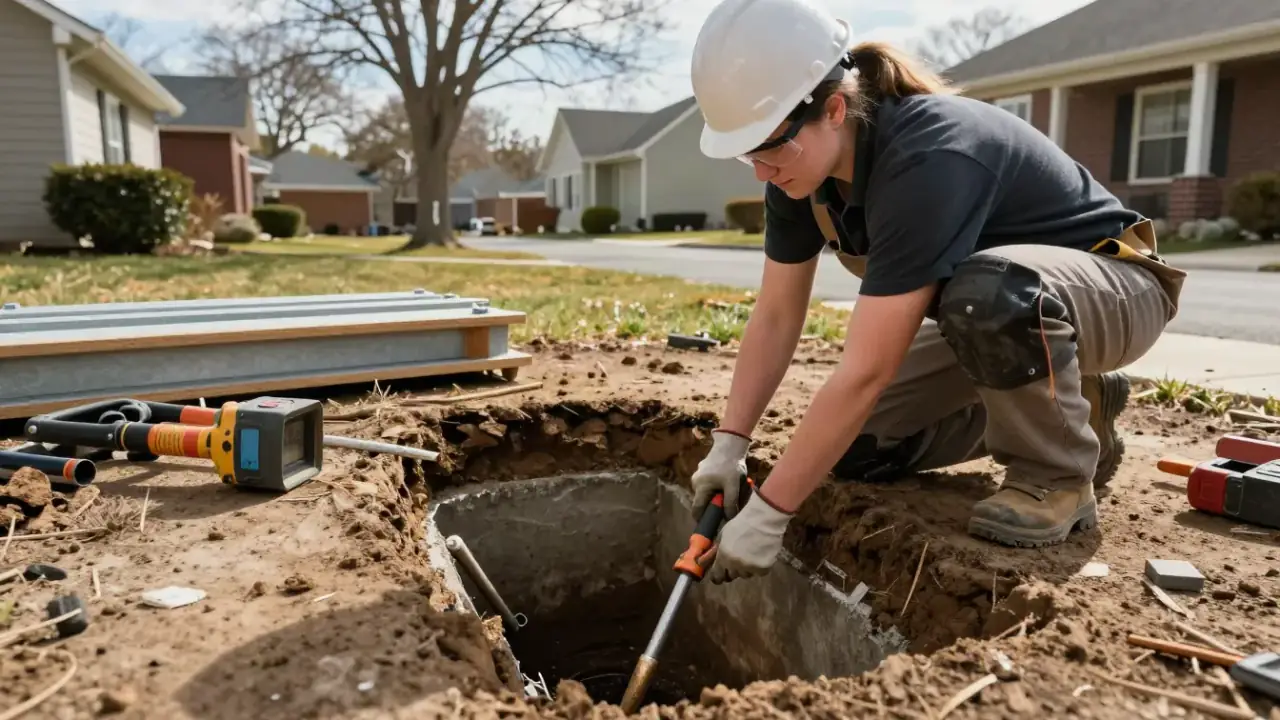
A slab leak in a Houston-area home is caused by the combination of expansive clay soil, heat-cycled copper or galvanized plumbing, and the natural settling of a post-tension or conventional foundation. When that soil swells and shrinks with our wet-dry cycles, it grinds against the pipes running under your slab until one finally cracks.
We have crawled under hundreds of Missouri City homes, and the story is almost always the same. Below we break down the specific causes we see most, how to spot them early, and how to prevent slab leaks in Missouri City before they cost you a fortune.
The Short Answer: Why Slab Leaks Happen Here
A slab leak is a pressurized water leak in a pipe that runs beneath your home's concrete foundation, and it is needed whenever you see unexplained moisture, a rising water bill, or the sound of running water with every fixture off. In the Houston area, the leading causes are soil movement, pipe age, and water chemistry - not one single failure point.
Here is the cause list we work from on every call:
- Expansive clay soil that swells when wet and shrinks when dry
- Copper pipe erosion from decades of hot water cycling
- Tree and shrub roots searching for moisture under the slab
- Poor original installation - pipes laid too close to rebar or concrete
- High water pressure stressing joints and elbows
- Foundation movement from drought or drainage problems
If you are already seeing the symptoms, our team handles slab leak detection near me Missouri City with electronic listening equipment and thermal imaging - no guesswork, no unnecessary jackhammering.
Expansive Clay Soil and the Houston-Area Water Table
Expansive clay soil is the number one cause of slab leaks in the Houston area because it changes volume dramatically between our wet springs and dry summers. The clay under most of Fort Bend and Harris County can swell 10% or more when saturated, then shrink back and leave voids under the slab.
When that happens, the slab moves. It might only move a quarter inch, but a quarter inch is enough to shear a copper line that has been sitting in the same spot for 25 years. We see this pattern most in neighborhoods built in the 1980s and 1990s where the soil was never properly stabilized.
Missouri City sits right on the edge of the Beaumont Formation, which is some of the most active clay in Southeast Texas. That is why Slab Leak Repair in Quail Valley keeps us busy year-round - those homes were built on fill dirt that moves with every heavy rain.
How Our Wet-Dry Cycle Accelerates the Damage
From April through June we get soaking rains that push the clay to full expansion. Then July and August bake the same soil down to a cracked, shrunken crust. That cycle repeats every single year, and each cycle puts fresh stress on the pipes under your slab.
If your gutters dump water right next to the foundation, you are making it worse. Water pools on one side, the clay swells there, and the slab tilts. That tilt is what cracks pipes.
Aging Copper and Galvanized Pipes Under the Slab
Copper pipe under a slab has a realistic service life of 30 to 50 years in our water, and homes built before 1990 are already in that window. The copper itself does not fail all at once - it thins from the inside out.
Two things eat copper here. First, our water is moderately hard, and hot water moving at 130°F to 140°F accelerates the erosion on the pipe wall. Second, the pipe was laid directly against concrete or rebar in many older builds, which creates a contact point where corrosion starts.
Galvanized steel is worse. If your Missouri City home was built before 1975, there is a good chance you still have galvanized supply lines under the slab. Those rust from the inside and typically fail between 40 and 60 years. We can usually tell from the water pressure alone - if the pressure drops when two fixtures run at once, the pipe is choked with rust.
When the damage is isolated to one run, copper pipe repair Missouri City TX is often the fastest fix. When the whole system is at the end of its life, we talk about repiping instead of chasing leaks one at a time.
Can Tree Roots Cause Slab Leaks in Missouri City?
Yes - tree roots cause slab leaks in Missouri City, and they are one of the most common causes we find in established neighborhoods. Roots do not usually break a pipe by force. They find a pinhole leak, cluster around the moisture, and slowly widen the opening as the root grows.
Live oaks, pecans, and crepe myrtles are the usual suspects. A live oak root system can extend 60 to 90 feet past the canopy, which means a tree in your front yard can absolutely reach the supply line under your living room.
Here is what we look for when roots are the likely cause:
- Leak location that lines up with a mature tree on the same side of the house
- Seasonal pattern - worse in summer when roots chase water hardest
- Soil staining or a soft spot in the yard between the tree and the foundation
- Repeated leaks on the same pipe run year after year
Once roots have invaded a line, patching it rarely holds. We usually recommend rerouting the pipe around the root zone or lining it from the inside. Our trenchless pipe lining Missouri City service creates a new pipe inside the old one, so roots never touch the water again.
What Causes a Slab Leak in Missouri City TX Homes?
What causes a slab leak in Missouri City TX homes comes down to four local factors: active clay soil, hot-water copper erosion, high municipal water pressure, and original construction quality. Every slab leak we open up traces back to at least two of those.
Municipal water pressure in our area often runs 70 to 90 PSI at the meter. Most residential plumbing is only rated for 80 PSI, and anything above that puts constant stress on every joint under the slab. A $40 pressure-reducing valve can add years to your pipes.
Construction quality matters more than people think. In the boom years of the late 1990s and early 2000s, some subdivisions were built fast, and pipes were laid with too little bedding or too much contact with rebar. Those homes tend to leak earlier than the ones built a decade before.
We see this constantly in the older sections of Lake Olympia Slab Leak Repair work - homes from that era with original copper and no pressure regulation.
Signs You Already Have One
You do not need to see water to have a slab leak. Watch for these:
- The sound of running water when every faucet is off
- A water bill that jumped 20% or more with no change in usage
- Warm spots on the floor - that means a hot water line is leaking
- Cracks in tile or sheetrock that appeared in the last few months
- A musty smell in carpet or baseboards, especially near exterior walls
If any of those sound familiar, our water leak detection Missouri City service pinpoints the leak before we cut anything.
Common Mistakes Homeowners Make With Slab Leaks
The biggest mistake is waiting. A slab leak that starts as a pinhole can wash out the soil under your foundation in a matter of weeks, and foundation repair costs far more than the plumbing fix.
Here is what we see homeowners do wrong:
- Ignoring a small water bill bump. A 10% increase is often the first sign, and it is the cheapest one to fix.
- Jackhammering the wrong spot. Without electronic detection, you are guessing. We have seen three holes cut in a floor before the actual leak was found two rooms over.
- Patching a root-damaged pipe. The root is still there. It will find the patch.
- Turning off the water and forgetting about it. That stops the damage but does not fix the pipe, and it leaves you without water.
- Hiring the cheapest bid. A slab leak repair that skips pressure testing or line verification will leak again within a year.
One more: do not let anyone talk you into a full repipe before the leak is actually located. Sometimes a single section repair is all you need.
When to Call a Professional
Call a professional the moment you have two or more slab leak symptoms at the same time - that combination almost always means an active leak, not a fluke. A single warm floor spot or one high bill could be something else, but together they point under the slab.
We handle this every day in Missouri City. Our technicians locate the leak with acoustic listening gear and thermal imaging, then give you a flat price before any concrete is opened. If the fix is a simple section repair, that is what we do. If the line is too far gone, we walk you through rerouting, lining, or repiping so you can decide with real numbers in front of you.
We also handle the less common cases - post-tension slab leak detection Missouri City TX work requires extra care because you cannot cut through the cables, and we are set up for it.
Frequently Asked Questions
What causes a slab leak in Missouri City TX?
The main causes are expansive clay soil movement, copper pipe erosion from hot water, tree root intrusion, and water pressure above 80 PSI. Most leaks we find trace back to two or more of these factors working together over 20 to 40 years.
Why do slab leaks happen in Houston-area homes?
Houston-area homes sit on some of the most active clay soil in Texas. That clay swells 10% or more when wet and shrinks in summer drought, and the constant movement cracks the pipes running under the slab. Add heat-cycled copper and you get the leak rates we see here.
Can tree roots cause slab leaks in Missouri City?
Yes. Live oaks and pecans can send roots 60 to 90 feet past the canopy, and those roots find pinhole leaks and widen them over time. If you have a mature tree within 30 feet of the foundation, root intrusion is a real possibility.
How to prevent slab leaks in Missouri City Texas?
Keep water away from the foundation with gutters and proper grading, install a pressure-reducing valve if your PSI is above 80, and have your plumbing inspected every 3 to 5 years once the home passes 20 years old. Those three steps prevent most of the leaks we see.
How much does slab leak repair cost in Missouri City in 2026?
Typical 2026 pricing in this area runs $500 to $1,500 for a straightforward section repair, and $3,500 to $12,000 for tunneling, rerouting, or repiping. Detection alone usually runs $150 to $400, and we credit that toward the repair when you hire us.
Get Help With Slab Leak Repair in Missouri City
If you have a warm floor, a climbing water bill, or the sound of running water with everything off, we can find the leak and fix it. We serve Missouri City and the surrounding Houston-area neighborhoods with same-day detection and upfront pricing.
Call Missouri City Slab Leak Repair at (281) 326-6169 and we will get a technician out to pinpoint the problem.