Slab Leak Repair Options: Tunneling, Rerouting, and Epoxy Lining
Tunneling, rerouting, and epoxy lining are the three main slab leak repair options in Missouri City TX. Here's how they compare on cost, lifespan, and mess.
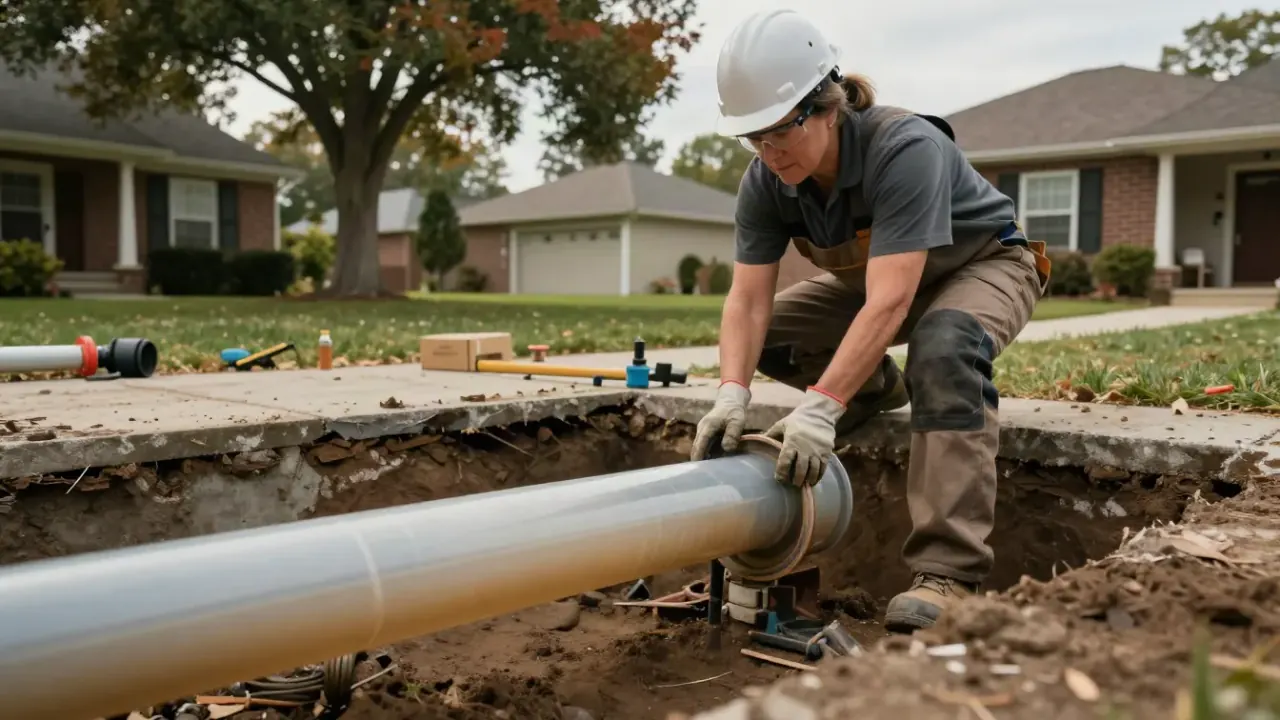
The three slab leak repair options in Missouri City TX are tunneling, rerouting, and epoxy lining - and the right one depends on where the leak is, what material your pipes are, and whether the slab is post-tension. Tunneling digs under the foundation to reach the failed pipe directly, rerouting abandons the buried line and runs a new one through the attic or walls, and epoxy lining rebuilds the pipe from the inside without breaking concrete. Each has a different price tag, lifespan, and level of disruption, and picking the wrong one for your home is how a $3,000 problem becomes a $12,000 one.
We have run all three methods on homes across Fort Bend County, from 1970s Quail Valley ranches to newer builds in Sienna, and the deciding factors are almost always the same: pipe material, slab type, and how much of the line is already failing. Below we break down each method, what it costs in 2026, and how to tell which one your house actually needs.
What Are the Slab Leak Repair Options in Missouri City TX?
Slab leak repair options in Missouri City TX are the methods used to stop water escaping from a pressurized pipe buried under your foundation - tunneling, rerouting, and epoxy lining are the three that work. A slab leak is not a foundation crack; it is a hole or joint failure in a copper, PEX, or galvanized line running through or under the concrete. The water surfaces as a warm spot on the floor, a spike in your water bill, or the sound of running water when nothing is on.
Before anyone picks a method, we locate the leak precisely. We use acoustic listening equipment and thermal imaging to pin the break to within a few inches, then confirm with a pressure test on the isolated line. Guessing at the location is how homeowners end up with three holes in the floor and no fix. If you are not sure whether you even have a slab leak, start with high water bill leak investigation Missouri City TX - we isolate the line and tell you what is actually leaking before any concrete gets touched.
Three things drive the choice of repair method:
- Pipe material. Copper, PEX, and galvanized pipe each fail differently and accept different repairs.
- Slab type. Post-tension slabs have tensioned cables running through them - you cannot cut those.
- Extent of failure. One pinhole leak is a different job than a line that has failed in four places.
Tunneling: Accessing the Pipe From Below
Tunneling for slab leaks Missouri City TX homeowners choose when they want the original pipe repaired or replaced in place, without tearing up the finished floor. We dig an access shaft outside the foundation, then tunnel horizontally under the slab to reach the failed section. The slab stays intact. Your tile, hardwood, or laminate stays intact.
A typical tunnel is 3 to 4 feet deep and 3 feet wide, running 5 to 15 feet under the house. We shore the walls as we go, replace the bad section of pipe - or the whole run if it is copper that has already failed once - then backfill and compact in lifts. The yard gets patched, and you are back to normal in two to four days for a single-point repair.
When tunneling makes sense
Tunneling is the right call when the leak is under a finished floor you do not want to replace, when the pipe is accessible from outside the footprint, and when you want to keep the plumbing in its original location. It is also the only option that lets us inspect the surrounding pipe while we are in there. If we find three more pinholes forming two feet away, we can address them in the same tunnel instead of coming back in six months.
What tunneling is not good for: post-tension slabs where the cable layout blocks the path, or leaks directly under a load-bearing wall footing. In those cases we look at the other two methods. We handle the full scope of under-slab access Missouri City work, including the concrete patch and yard restoration.
Rerouting: Moving the Line Out of the Slab
Pipe rerouting Missouri City TX is the method where we abandon the leaking line under the slab and run a new pipe through the attic, walls, or ceiling to reach the same fixtures. The old line stays buried and dead. The new line never touches concrete, so it cannot suffer the same abrasion and soil movement that killed the original.
This is the fastest of the three options in most homes. A single-bathroom reroute is often a one-day job. We cut into drywall or ceiling in a few spots, run PEX or copper, tie into the existing supply, and pressure-test the whole system before we close anything up. Drywall patching is on you or your painter - we leave clean openings, not jagged holes.
When rerouting is the better answer
Rerouting wins when the slab is post-tension, when the leak is under a load-bearing wall, or when the existing pipe has failed more than once. If your home has already had two slab leaks in five years, patching a third is throwing money at a losing battle. Moving the line out of the slab ends the cycle.
The trade-off is aesthetics in some layouts. A reroute to a kitchen island or a master bath on an interior wall may require a soffit or a dropped ceiling section. We walk you through the routing before we cut anything so there are no surprises. If the whole house is on borrowed time, we will tell you that too - sometimes the honest answer is whole-house repiping Missouri City TX rather than chasing leaks one at a time.
Epoxy Lining: Rebuilding the Pipe From the Inside
Epoxy pipe lining Missouri City TX is a trenchless method where we clean the inside of the failing pipe, then pull an epoxy-saturated liner through it and cure it in place. The epoxy bonds to the pipe wall and forms a new structural pipe inside the old one. No digging, no tunneling, no drywall.
The process takes four to eight hours for a typical residential line. We isolate the section, run a camera to confirm the interior condition, abrasive-clean the walls, then install and cure the liner. Once cured, the epoxy is rated for potable water and carries a 50-year design life in most manufacturer specs. It handles the pinhole leaks and joint failures that plague copper in our soil conditions.
Where epoxy lining fits
Epoxy lining works best on copper and galvanized lines with isolated failures and reasonably intact walls. It is not a rescue for a pipe that is collapsed, crushed, or already 80% blocked with scale. We camera the line first - if the interior is too far gone, we will not sell you a lining job that is going to fail.
It is also the least disruptive option for homes with expensive flooring, and it is often the cheapest of the three when you factor in floor replacement. We run trenchless pipe lining Missouri City jobs regularly in the older sections of town where original copper is reaching the end of its service life.
Tunneling vs Rerouting vs Epoxy Lining: Side-by-Side Comparison
Tunneling vs rerouting vs epoxy lining Missouri City homeowners compare on four things: cost, disruption, lifespan, and whether the fix stays in the slab. Here is how they stack up.
- Tunneling: $4,500-$9,000 for a single-point repair; 2-4 days; 20-40 year lifespan on new copper or PEX; yard and slab patch included; keeps plumbing in original location.
- Rerouting: $3,500-$8,000 depending on fixture count and routing path; 1-2 days; 40-50 year lifespan on PEX; drywall patching required; abandons the buried line permanently.
- Epoxy lining: $3,000-$7,000 for a residential run; 4-8 hours; 50-year design life; no concrete or drywall damage; requires intact host pipe.
Those ranges are typical 2026 pricing in the Missouri City area for a single-line residential repair. Multi-line jobs, post-tension slabs, and second-story reroutes push toward the top of the range or above it.
If you want the method that touches the least of your home, epoxy lining usually wins. If you want the method that lets us replace the pipe entirely with new material, tunneling or rerouting wins. There is no universal best - there is a best for your specific slab, pipe, and budget.
How Much Do Different Slab Leak Repairs Cost in Missouri City Texas?
Different slab leak repairs cost between $3,000 and $9,000 in Missouri City in 2026, with epoxy lining at the low end and tunneling at the high end for most single-line jobs. The spread comes from three variables: how much concrete or yard work is involved, how long the pipe run is, and whether the slab is post-tension.
Here is what moves the number:
- Access. A leak 8 feet under the slab costs more to tunnel to than one 2 feet from the foundation edge.
- Pipe material. Copper repair is straightforward. Galvanized replacement often means replacing more length because the whole run is compromised.
- Post-tension slabs. These require cable-safe access and add $1,000-$2,500 to any method. We handle post-tension slab leak repair Missouri City TX regularly in the newer master-planned communities.
- Hot vs cold line. Hot water lines fail faster and often need more aggressive repair. See our hot water line leak repair Missouri City TX page for why.
We give you a flat price before we start. No hourly surprises, no "we found more once we opened it up" unless you approve the change first.
Which Slab Leak Repair Lasts Longest in Missouri City?
Epoxy lining and rerouting both carry a 50-year design life, which makes them the longest-lasting slab leak repair options in Missouri City when they are done right. Tunneling with new copper or PEX lands in the 20-40 year range depending on soil conditions and water chemistry.
The reason epoxy and rerouting last is simple: they remove the failure mode. Copper under a slab fails because of abrasive soil contact, slab movement, and aggressive water. Epoxy shields the pipe from the water. Rerouting removes the pipe from the soil entirely. Tunneling replaces the failed section, but the new pipe is still sitting in the same soil that killed the last one.
That is why we push rerouting or whole-house repiping on homes that have already had two or more leaks. Patching the third leak in the same slab is a bet against the same conditions that caused the first two. If your home is in one of the older neighborhoods - we see this a lot in Quail Valley Slab Leak Repair territory - the original copper is often past its useful life and a broader fix is the cheaper long-run decision.
Common Mistakes We See With Slab Leak Repairs
The most expensive mistake is repairing the leak without confirming the pipe material and slab type first. We have walked into homes where a previous contractor jackhammered a post-tension slab without checking the cable layout - that is a structural repair, not a plumbing repair, and it costs five figures.
Other mistakes we see regularly:
- Chasing the wet spot instead of the leak. Water travels along the slab before it surfaces. The wet carpet is often 10 feet from the actual break.
- Patching copper with copper in the same soil. If the original failed at year 25, the patch will fail at year 25 too.
- Epoxy lining a pipe that is already collapsed. If the host pipe is not structurally sound, the liner has nothing to bond to.
- Ignoring the water heater and softener connections. A surprising number of "slab leaks" are actually failing flex connectors at the heater. We check those first.
- Not pressure-testing after the repair. Every job we do ends with a full-system pressure test before we close anything up.
If your water bill jumped and you cannot find the source, do not start cutting concrete. Start with detection. We also handle water service line leak repair Missouri City TX for leaks on the main line between the meter and the house - a different failure point that homeowners often confuse with a slab leak.
When to Call a Professional
Call a professional when you hear running water with everything off, when a section of floor is warm to the touch, or when your water bill jumps by more than 20% month over month with no change in usage. Those three signs point to a pressurized leak under the slab, and they do not fix themselves.
At Missouri City Slab Leak Repair, we locate the leak with acoustic and thermal equipment, confirm the pipe material and slab type, and give you a flat price on the method that fits - tunneling, rerouting, or epoxy lining. We do not sell the most expensive option by default. We sell the one that ends the problem.
If your home is in one of the newer communities and you are seeing early copper failures, we also work regularly in Sienna Slab Leak Repair and the surrounding neighborhoods, where slab construction and soil movement create predictable failure patterns.
Frequently Asked Questions
What are the slab leak repair options in Missouri City TX?
The three options are tunneling, rerouting, and epoxy lining. Tunneling digs under the slab to repair the pipe in place. Rerouting abandons the buried line and runs a new pipe through the attic or walls. Epoxy lining rebuilds the pipe from the inside without any digging. The right choice depends on your pipe material, slab type, and budget.
Is tunneling or epoxy lining better for slab leaks in Missouri City?
Epoxy lining is better when the host pipe is structurally sound and you want zero concrete or drywall damage - it carries a 50-year design life. Tunneling is better when the pipe is too far gone to line or when you want new pipe material installed. We camera the line first and tell you which one your pipe actually supports.
How much do different slab leak repairs cost in Missouri City Texas?
In 2026, epoxy lining runs $3,000-$7,000, rerouting runs $3,500-$8,000, and tunneling runs $4,500-$9,000 for a typical single-line residential repair. Post-tension slabs add $1,000-$2,500. Multi-line jobs and second-story reroutes push toward the top of those ranges.
Which slab leak repair lasts longest in Missouri City?
Epoxy lining and rerouting both carry a 50-year design life, making them the longest-lasting options. Tunneling with new copper or PEX lasts 20-40 years depending on soil and water chemistry. If your home has already had two or more leaks, rerouting or whole-house repiping is usually the better long-term call.
Can I just patch the leak and move on?
You can, but if the pipe failed once in this soil, it will likely fail again. A single-point patch buys time, not a permanent fix. On copper lines past 25 years old, we usually recommend rerouting or lining the full run instead of chasing leaks one at a time.
Get Help With Slab Leak Repair in Missouri City
If you have a warm floor, a spiking water bill, or the sound of running water with everything off, we can locate the leak and give you a flat price on the right repair method for your home. We serve all of Missouri City and the surrounding Fort Bend County communities.
Call Missouri City Slab Leak Repair at (281) 326-6169 to schedule detection and a written repair quote.